Compare the 10 capabilities that matter when selecting a merchandise partner for cruise retail,...
How to Choose a Full-Service Merchandise Partner
Looking for a partner who can take more off your plate? Compare the capabilities that matter from ideation and OEM development to QC, warehousing and global delivery.
Looking for a merchandise partner who can take more off your plate?
The right partner should do much more than quote products and manage production. A true full-service merchandise partner helps turn your first idea, specification or commercial objective into a retail-ready product while reducing the number of suppliers, handoffs and decisions your team needs to manage.
For brands running OEM, private label or custom retail programs, this can include everything from ideation and design to product engineering, sourcing, production, quality control, warehousing and international logistics.
The most important question is therefore not:
Who can produce this product?
A better question is:
Who can help us develop the right product and manage the complete process reliably from idea to delivery?
What does full-service merchandise really mean?
A turnkey one-stop merchandise partner should be able to connect most or all of these services:
- ideation and concept development
- product and collection design
- OEM and private label development
- trend and material research
- raw material libraries
- garment engineering
- technical specifications
- prototyping and sampling
- product testing
- sourcing and production
- compliance
- hands-on quality control
- packaging
- warehousing
- fulfillment
- international logistics
- ecommerce support when required
For the buyer, the benefit is straightforward: fewer interfaces, clearer responsibility and more time to focus on the commercial side of the business.
1. Start with ideation, not with a catalog
Some projects begin with an exact specification.
Others begin with a sentence such as:
“We need something new.”
“We want to refresh this category.”
“Our guests are not responding to the current assortment.”
“We need a collection around this campaign.”
A strong development partner should be comfortable with both situations.
Ideation translates your brand, audience, trends, materials and commercial objectives into product opportunities before development begins.
That is particularly important when the goal is differentiation.
Choosing an existing product and adding a logo can solve a straightforward need. Creating something customers genuinely want to buy usually requires deeper thinking.
2. Look for capsule collection thinking
Product breadth alone does not create a strong assortment.
The better question is whether your partner can connect different products into a coherent retail story.
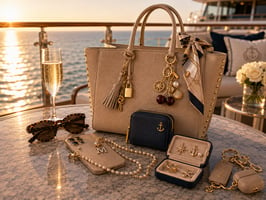
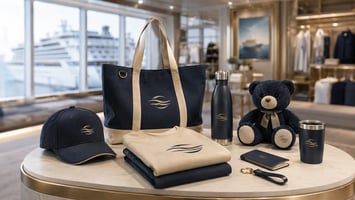
A focused capsule collection might combine:
- apparel
- headwear
- bags
- drinkware
- plush
- kids products
- accessories
- lifestyle items
Every item does not need to look identical.
The collection should share a clear idea, audience and commercial purpose.
This approach can create:
- stronger brand consistency
- clearer retail storytelling
- better cross-category opportunities
- more focused assortments
- easier seasonal extensions
- stronger perceived value
3. Understand what is actually developed in-house
Ask what happens between the first design and the factory order.
Relevant capabilities can include:
- garment engineering
- technical drawings
- specifications
- material selection
- pattern development
- prototype evaluation
- packaging development
- product testing
Strong technical development helps identify problems before production begins.
For buyers, that means fewer surprises later.
4. Look at the manufacturing relationships
A large factory database sounds impressive.
Long-term relationships with specialized manufacturers are usually more valuable.
Retail products require consistency, repeatability and an understanding of consumer expectations.
Ask:
- How long have key production partners worked with the company?
- Which factories specialize in which categories?
- Are appropriate certifications available?
- How are materials approved?
- How are production changes controlled?
- How are repeat orders kept consistent?
The objective is not simply factory access.
It is reliable retail manufacturing.
5. Understand how quality is controlled
Quality control should not begin after the goods arrive.
Depending on the product, a structured process can include:
- material approvals
- pre-production samples
- technical specification reviews
- inline inspections
- final inspections
- testing
- compliance checks
- packaging verification
Having a hands-on QC team close to production makes it easier to identify and resolve issues before products ship.
6. Use global teams to increase speed
International sourcing does not have to slow projects down.
Teams operating across different time zones can keep a project moving.
Development can continue in Europe, communication can take place in the United States and sourcing or QC teams in Asia can work directly with factories during their business day.
For the customer, that can mean shorter waiting times between development steps and faster answers when decisions are needed.
7. Think beyond production
A finished product at the factory is not the end of the project.
Depending on your needs, the same partner may also manage:
- international freight
- customs coordination
- warehousing
- inventory
- multi-location delivery
- replenishment
- fulfillment
- ecommerce
This becomes especially valuable for companies supplying multiple locations, markets, ships, dealerships, resorts or properties.
8. Compare total workload, not only unit price
The lowest product quotation is not always the lowest total cost.
Managing multiple vendors can create additional work through:
- repeated briefings
- separate sampling processes
- different timelines
- inconsistent quality standards
- multiple logistics flows
- duplicated administration
- unclear accountability
A turnkey one-stop shop can reduce those hidden costs by connecting the development process under one responsibility.
9. Ask whether the partner understands retail
There is an important difference between products created primarily for distribution and products developed to be purchased by consumers.
Retail products need to earn their place on the shelf.
That requires attention to:
- perceived value
- design
- material quality
- packaging
- price positioning
- usability
- customer relevance
- repeat purchase potential
Retail experience becomes especially important for private label and OEM programs.
10. Check whether the partner can scale with you
A successful product may become:
- another color
- another size
- a seasonal edition
- a second category
- a complete capsule collection
- an international program
- a multi-location rollout
A strong partner should be able to develop the next stage without forcing you to rebuild the supply chain each time.
Questions to ask before selecting a merchandise partner
Before making a decision, ask:
- Can you contribute ideas or do you mainly execute specifications?
- Can you develop completely custom OEM products?
- Do you support private label?
- Which design and engineering capabilities are in-house?
- Who manages the factories?
- How is quality controlled?
- Do you have your own QC resources in Asia?
- Can multiple categories be combined into one collection?
- Can you manage warehousing and logistics?
- Can you support international programs?
- How long have you worked with your main manufacturing partners?
- Who is responsible for the project from first brief through delivery?
How CAICON approaches full-service merchandise
Founded in 1998, CAICON develops OEM products, private label programs and custom retail collections for demanding brands including BMW, Mercedes-Benz, Regent Seven Seas and AIDA Cruises.
Projects can start with an existing specification, a rough idea, a commercial objective or a blank sheet of paper.
Ideation, in-house design, product engineering, sourcing, production, compliance, hands-on quality control, warehousing and logistics can all be managed through one turnkey service.
Teams working across the United States, Europe and Asia help projects keep moving across time zones.
The objective is simple:
less coordination for your team, faster development, clearer accountability and better products for your customers.
Frequently Asked Questions
What is a full-service merchandise partner?
A full-service merchandise partner manages multiple stages of a merchandise program, from ideation and design through product development, manufacturing, quality control, warehousing and delivery.
What is the difference between sourcing and OEM development?
Sourcing usually starts with an existing product. OEM development creates a product specifically around your specification, brand, audience or commercial objective.
What does private label mean?
Private label products are developed and sold specifically under the customer's brand. They can range from adapted existing products to completely custom-developed items.
What is a merchandise one-stop shop?
A merchandise one-stop shop gives the customer one partner for several parts of the process rather than requiring separate companies for design, development, manufacturing, QC and logistics.
Why are capsule collections useful?
Capsule collections connect several relevant products around one brand story, target group or commercial objective. This creates a more coherent assortment than sourcing individual products independently.
Looking for a fresh product idea, a new capsule collection or a development partner who can take more off your plate? Talk to CAICON about your next OEM or private label project.