Turnkey merchandise development for cruise lines and passenger retail, from ideation and capsule...
Full-Service Merchandise for Luxury Travel and Hospitality
Learn how luxury hotels, resorts and cruise brands can develop premium private label collections through ideation, OEM development, sourcing, production and QC.
Luxury guests notice details.
That includes the products they find in a hotel, resort, cruise boutique or destination store.
A product that feels generic can undermine an otherwise carefully designed guest experience.
A product that feels considered can extend that experience long after the journey is over.
For luxury travel brands, merchandise therefore deserves the same attention as other guest touchpoints.
Start with one question
Before developing the collection, ask:
What would this guest genuinely want to own?
Not:
Where can we place the logo?
That shift changes the entire development process.
What makes luxury travel merchandise different?
Premium travel products need to combine:
- functionality
- quality
- aesthetics
- brand relevance
- guest desirability
- perceived value
- exclusivity
- retail margin
The branding can often become more subtle as product design becomes stronger.
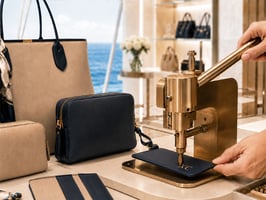
A discreet embossed logo on a beautiful leather accessory can sometimes communicate more than a large printed logo on a standard product.
Ideation begins with the experience
A luxury collection can take inspiration from:
- the property
- ship design
- architecture
- destination
- local culture
- materials
- signature experiences
- wellness
- culinary concepts
- excursions
- heritage
- seasonal occasions
Those references can become the foundation for product concepts.
The merchandise then amplifies the experience rather than sitting separately from it.
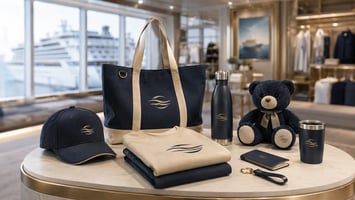
Capsule collections keep luxury retail focused
Luxury does not require hundreds of SKUs.
A focused capsule collection can be much stronger.
Depending on the guest and environment, it might combine:
- premium apparel
- headwear
- travel bags
- leather accessories
- drinkware
- resort accessories
- kids products
- gifting
- lifestyle items
The common denominator should be one brand story and one level of execution.
Private label creates exclusivity
Private label and OEM development allow travel brands to move beyond existing catalog products.
Products can be developed around:
- custom materials
- specific colors
- exclusive shapes
- unique functionality
- custom trims
- embossing
- packaging
- finishing
That creates products associated specifically with the property, cruise line or travel experience.
Premium products need retail-focused factories
Luxury positioning raises expectations.
Manufacturing partners therefore need experience with branded consumer products and consistent retail execution.
Long-term factory relationships can help with:
- material development
- technical problem solving
- sampling
- consistency
- repeat orders
- finishing standards
A development partner can then select the appropriate specialist factory for each product category.
Quality control protects perceived value
A small defect can have an outsized impact on a premium product.
Quality processes can include:
- material approval
- sample evaluation
- technical specifications
- inline inspections
- final inspections
- testing
- packaging review
Hands-on QC close to production helps protect the final result before shipment.
Turnkey service saves internal time
Luxury travel companies often have many stakeholders involved in merchandise:
- retail
- marketing
- brand
- procurement
- operations
- guest experience
Adding separate external partners for design, development, sourcing, testing and logistics increases complexity.
A one-stop shop creates one point of responsibility for the overall project.
For buyers, that means:
- fewer suppliers
- fewer handoffs
- faster decisions
- clearer accountability
- stronger brand consistency
Global teams can keep development moving
Travel brands operate internationally.
Product development often does too.
With teams working across the United States, Europe and Asia, projects can progress between design, customer communication, sourcing and production across different time zones.
That can shorten development cycles and keep momentum throughout the project.
How CAICON supports luxury travel retail
CAICON develops OEM products, private label programs and custom capsule collections for demanding passenger and travel brands including Regent Seven Seas and AIDA Cruises.
The development model covers:
- ideation
- in-house design
- material development
- garment engineering
- technical specifications
- prototypes
- sourcing
- production
- compliance
- hands-on QC
- warehousing
- logistics
This gives the buyer one turnkey partner from first concept to finished delivery.
Frequently Asked Questions
What is luxury travel merchandise?
Luxury travel merchandise includes premium products developed for hotels, resorts, cruise lines and other travel brands, often sold as part of the guest experience.
What is the difference between luxury merchandise and promotional products?
Luxury retail merchandise is designed to be purchased by the customer. Perceived value, materials, design and desirability therefore play a much larger role.
Why is private label important for luxury travel?
Private label allows the product to be developed specifically around the brand and guest instead of relying on widely available products.
Which product categories work for luxury travel?
Relevant categories can include apparel, bags, leather goods, drinkware, accessories, travel products, kids items, gifting and lifestyle products.
Can CAICON develop luxury products from scratch?
Yes. Development can begin with a detailed OEM specification, a brand story, a commercial objective or an initial idea.
Looking for a premium product idea, a private label program or a capsule collection that feels native to your guest experience? Talk to CAICON about your next luxury travel retail project.