Learn how luxury hotels, resorts and cruise brands can develop premium private label collections...
Luxury Travel Retail Collections: How to Choose the Right Private Label Partner
A practical guide for cruise lines, resorts and luxury travel brands selecting a private label and OEM partner for premium retail collections.
Looking for products that feel like part of the guest experience rather than another branded souvenir?
That is where private label changes the conversation.
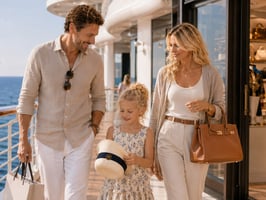
For cruise lines, resorts, hotels and premium destinations, merchandise can become a physical extension of the experience.
The right product reminds guests where they were, what they experienced and how the journey made them feel.
The right private label partner helps turn that emotional opportunity into a commercially viable product.
Start with the guest, not with the logo
A luxury travel guest does not buy a product simply because branding exists.
They buy because the product offers:
- design
- relevance
- quality
- utility
- memory
- emotion
- exclusivity
- gifting value
Branding should reinforce those qualities.
It should not have to compensate for their absence.
Understand the buying moment
Travel creates powerful purchase occasions.
Guests might want to remember:
- a voyage
- a destination
- an anniversary
- an expedition
- a resort
- a family vacation
- an entertainment experience
- a once-in-a-lifetime moment
Ideation begins by understanding those moments.
The product can then be designed around them.
What does a strong private label partner contribute?
A private label partner should bring more than production capacity.
Look for these capabilities.
Ideation
Can the partner contribute fresh product opportunities based on the guest, brand and commercial objective?
Design
Can brand identity be translated into materials, forms, colors, details and packaging?
OEM development
Can products be developed from scratch when required?
Material expertise
Can the right materials be identified for the desired quality, functionality and price?
Product engineering
Can technical drawings, specifications and prototypes translate creativity into manufacturable products?
Retail manufacturing
Does the manufacturing network specialize in consumer products intended for retail?
Quality control
Who checks the products during development and production?
Logistics
Can products be moved efficiently from factory to warehouse, ship, resort or retail operation?
Scalability
Can a successful product grow into a larger collection?
Create collections instead of assortment noise
A strong capsule collection does not need dozens of unrelated products.
It needs a clear reason to exist.
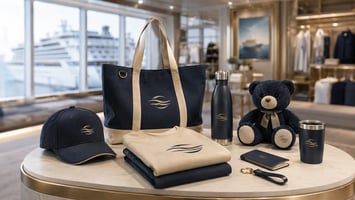
A luxury cruise capsule might combine:
- a premium garment
- a travel bag
- a leather luggage tag
- a cap
- drinkware
- a small accessory
A family-focused resort capsule might combine:
- kids apparel
- plush
- accessories
- collectibles
- activity products
The categories change depending on the customer.
The principle stays the same:
one brand story, one guest profile, one commercial objective.
Products can amplify the brand
Brand amplification goes beyond putting a logo on a surface.
It can happen through:
- colors
- materials
- construction
- details
- packaging
- texture
- functionality
- storytelling
A guest should sometimes recognize the brand feeling before even noticing the logo.
That is a much stronger form of branded product development.
Long-term manufacturing relationships create value
Private label development requires close communication between product developers and factories.
Long-term production relationships can improve:
- technical understanding
- sampling
- consistency
- problem solving
- repeat production
- material knowledge
Specialized retail factories also understand that a consumer is making a purchasing decision based on the finished product.
Hands-on QC matters
Premium positioning increases the cost of inconsistency.
Quality control should be considered during development, not added at the end.
Depending on the product, this can cover:
- materials
- color
- measurements
- stitching
- construction
- printing
- packaging
- labeling
- compliance
Dedicated QC resources in Asia allow issues to be addressed closer to production.
Turn one successful idea into a category
A successful product can create opportunities beyond the original SKU.
It might become:
- a seasonal edition
- additional colors
- a collectible
- a kids version
- a travel accessory
- a gifting product
- another category
This is where strong development thinking can transform one product into a retail platform.
AIDA Clubbies: from product to scalable category
AIDA Cruises wanted to evolve its Clubbies plush concept into a stronger retail program.
CAICON expanded the collection into multiple subcategories and additional purchase occasions.
After the fleet-wide introduction, average retail sales in the plush category increased by 45 percent compared with the previous collection.
The important point is not only the sales increase.
It demonstrates what happens when a product is treated as the beginning of a category rather than the end of a development project.
Cross-industry experience can create fresh ideas
Travel retail does not need to learn only from travel retail.
Ideas can come from:
- automotive
- fashion
- entertainment
- sports
- hospitality
- consumer products
CAICON's experience includes demanding brands such as BMW, Mercedes-Benz, Regent Seven Seas and AIDA Cruises.
This cross-industry perspective can bring different material, design and product-development benchmarks into travel retail.
How CAICON approaches private label development
Founded in 1998, CAICON develops OEM products, private label programs and complete retail collections.
Projects can begin with:
- an existing specification
- an initial sketch
- a product category
- a brand story
- a customer need
- a commercial target
- a completely blank page
A turnkey process can then combine:
- ideation
- in-house design
- product engineering
- technical specifications
- material sourcing
- sampling
- testing
- production
- compliance
- hands-on QC
- warehousing
- international logistics
Teams across the United States, Europe and Asia keep communication, development and production moving across time zones.
For the buyer, the advantage is clear:
one partner, fewer handoffs and a more direct path from idea to retail-ready product.
Frequently Asked Questions
What is a private label travel collection?
A private label travel collection is developed specifically for a cruise line, hotel, resort or destination brand and sold under that brand.
What is the difference between OEM and private label?
OEM describes custom manufacturing to defined product requirements. Private label describes products sold under the customer's brand. Many custom retail programs combine both.
What is ideation in merchandise development?
Ideation is the process of turning a brand, guest insight, commercial objective or initial idea into potential product concepts before technical development begins.
Why are capsule collections effective?
Capsule collections concentrate several complementary products around one audience and story, creating stronger consistency and clearer retail presentation.
Why use retail-focused factories?
Factories experienced in retail consumer products understand the importance of finish, perceived value, repeatability and the customer's purchasing expectations.
Why use a turnkey merchandise partner?
A turnkey partner can connect ideation, design, sourcing, production, QC and logistics, reducing the number of interfaces the customer needs to manage.
Looking for a fresh private label idea, a premium travel product or a capsule collection your guests genuinely want to buy? Talk to CAICON about taking it from first idea to retail-ready delivery.